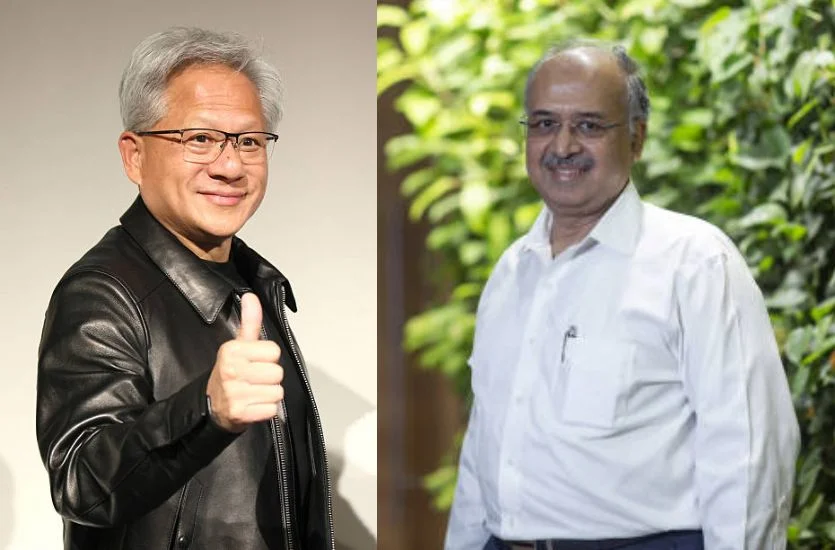
The names Dilip Shanghvi and Jensen Huang represent two very different paths to global business leadership. Shanghvi built his reputation in pharmaceuticals, transforming Sun Pharmaceutical Industries from a small medicine company into a major international healthcare business. Huang, meanwhile, co-founded NVIDIA and helped turn graphics processors into a foundation for accelerated computing and modern artificial intelligence.
Although their industries are dramatically different, Dilip Shanghvi and Jensen Huang share several important characteristics: long-term thinking, an emphasis on innovation, strategic expansion, and the ability to build companies around changing market needs. Shanghvi focused on medicines, specialty pharmaceuticals, research, and international expansion, while Huang focused on computing architecture, GPUs, software ecosystems, and artificial intelligence.
This article explores their backgrounds, careers, companies, leadership approaches, achievements, and the similarities and differences between their business journeys.
Dilip Shanghvi and Jensen Huang: An Introduction
Dilip Shanghvi and Jensen Huang became prominent business figures by building companies that eventually reached global markets.
Dilip Shanghvi is the founder and Executive Chairman of Sun Pharmaceutical Industries. According to Sun Pharma, he founded the company and continues to serve as Executive Chairman. He has also chaired Sun Pharma Advanced Research Company, which focuses on research and innovative drug-delivery technologies.
Jensen Huang is the founder and CEO of NVIDIA. NVIDIA says Huang founded the company in 1993 and has served as its president and chief executive since its inception. The company became especially important in computing through GPUs, accelerated computing, and technologies supporting modern AI.
Their careers demonstrate how businesses in completely different industries can become global through focused strategy and sustained investment.
Dilip Shanghvi and Jensen Huang: Early Backgrounds
The early lives of Dilip Shanghvi and Jensen Huang were different, but both eventually developed strong connections with technology, business, and innovation.
Dilip Shanghvi studied commerce at the University of Calcutta. His early exposure to the pharmaceutical business came through his family. His father was involved in pharmaceutical distribution, giving Shanghvi an opportunity to understand the medicine market from close range. Sun Pharma and other biographical sources identify his commerce education and early involvement in the pharmaceutical sector.
Jensen Huang followed a technical and engineering-oriented educational path. NVIDIA states that he earned a bachelor’s degree in electrical engineering from Oregon State University and a master’s degree in electrical engineering from Stanford University. Before founding NVIDIA, he worked at LSI Logic and Advanced Micro Devices.
This difference became important later. Shanghvi developed his business career around pharmaceuticals and commercial strategy, while Huang built his career around semiconductor technology and computer engineering.
Dilip Shanghvi and Jensen Huang: Building Companies From the Ground Up
One of the most interesting aspects of Dilip Shanghvi and Jensen Huang is that both became associated with companies that grew far beyond their original scale.
Shanghvi founded Sun Pharmaceutical Industries in 1983. Forbes reports that he started the business with a small amount of money borrowed from his father and initially focused on psychiatric medicines. Over time, Sun Pharma expanded its product portfolio, manufacturing capabilities, research activities, and international presence.
Huang co-founded NVIDIA in 1993. NVIDIA initially focused on computer graphics, but its technology eventually became central to gaming, high-performance computing, machine learning, and artificial intelligence. NVIDIA’s official history notes that its invention of the GPU in 1999 helped redefine computer graphics and later contributed to the growth of modern AI.
Both stories therefore involve a small beginning followed by a much broader transformation.
Dilip Shanghvi and Jensen Huang: The Rise of Sun Pharma
Dilip Shanghvi’s most important professional achievement has been the development of Sun Pharmaceutical Industries.
Sun Pharma began with a relatively narrow focus but gradually expanded into a multinational pharmaceutical organization. McKinsey reported in 2025 that the company had become India’s largest pharmaceutical company and operated in more than 100 countries.
A major element of Shanghvi’s strategy has been expansion through acquisitions. Forbes identifies the 2014 acquisition of Ranbaxy Laboratories for approximately $4 billion as a particularly important transaction in Sun Pharma’s development.
The company has also expanded its presence in specialty medicines, dermatology, research, and other areas. This illustrates a broader pattern in Shanghvi’s career: building scale while gradually increasing the complexity and international reach of the organization.
Dilip Shanghvi and Jensen Huang: The Rise of NVIDIA
The NVIDIA story is closely connected to Jensen Huang’s long tenure as the company’s leader.
NVIDIA was founded in 1993, and Huang has remained CEO since the beginning. The company initially became known for graphics processing technology, especially in the PC gaming industry. Its GPU architecture later became useful for workloads requiring large amounts of parallel computation.
This became particularly important as researchers began using GPUs for deep learning and other computationally demanding workloads.
Today, NVIDIA describes itself as a company focused on accelerated computing and generative AI. Its technology is used across areas including data centers, robotics, graphics, scientific computing, and artificial intelligence.
Huang’s long-term commitment to the GPU platform helped NVIDIA move from a graphics-focused company toward a much broader computing platform.
Dilip Shanghvi and Jensen Huang: Different Industries, Similar Vision
When comparing Dilip Shanghvi and Jensen Huang, the most obvious difference is their industry.
Shanghvi operates primarily in healthcare and pharmaceuticals. His business decisions involve medicines, regulatory requirements, research, manufacturing, healthcare markets, and patient needs.
Huang operates in semiconductors and computing. His company deals with processors, software, data centers, AI infrastructure, robotics, and advanced computing.
Despite these differences, both leaders have demonstrated an ability to identify long-term opportunities.
Shanghvi saw opportunities in pharmaceutical manufacturing and international expansion. Huang recognized that GPUs could become useful for much more than traditional graphics.
In both cases, the businesses benefited from developments that extended beyond their original markets.
Dilip Shanghvi and Jensen Huang: Innovation as a Business Strategy
Innovation plays a major role in both stories.
For Shanghvi, innovation has included pharmaceutical research, specialty products, drug-delivery technologies, and expansion into higher-value areas of healthcare. Sun Pharma states that Shanghvi is also chairman of Sun Pharma Advanced Research Company, which works on innovative drugs and delivery technologies.
For Huang, innovation has centered on computing architecture and the broader NVIDIA technology ecosystem. NVIDIA’s official biography credits the company’s GPU development with helping create new possibilities in graphics and accelerated computing.
The two approaches are different because the industries require different forms of innovation. Pharmaceutical innovation can take years of research, testing, and regulatory processes, while computing innovation often involves rapidly evolving hardware and software cycles.
Dilip Shanghvi and Jensen Huang: Global Expansion
Globalization is another major connection between Dilip Shanghvi and Jensen Huang.
Sun Pharma has developed an international presence across more than 100 countries, according to McKinsey. The company has used acquisitions, manufacturing expansion, product development, and international operations to build its global footprint.
NVIDIA’s products have likewise become part of the worldwide technology ecosystem. Its processors and platforms support companies, research organizations, cloud providers, developers, and AI projects across numerous markets.
The two companies demonstrate different versions of globalization.
Sun Pharma expanded physical and commercial operations across pharmaceutical markets, while NVIDIA expanded a technology platform used by developers and businesses around the world.
Dilip Shanghvi and Jensen Huang: Leadership Styles
The leadership styles associated with Dilip Shanghvi and Jensen Huang also reflect their industries.
Shanghvi has emphasized focus, calculated risk, long-term growth, and organizational relationships. In a McKinsey interview, he discussed the importance of focus and described Sun Pharma’s development as a process involving calculated risks, adaptation, and long-term stability.
Huang’s leadership has been closely associated with long-term technological bets. His continued leadership of NVIDIA from its founding has allowed him to guide the company through several major shifts in computing.
NVIDIA’s official biography notes that Huang has remained president and CEO since the company’s creation in 1993.
This longevity is significant because both industries have changed dramatically during their careers.
Dilip Shanghvi and Jensen Huang: The Importance of Long-Term Thinking
Long-term thinking is one of the clearest themes when examining Dilip Shanghvi and Jensen Huang.
Shanghvi’s career demonstrates how a pharmaceutical company can evolve through incremental expansion, acquisitions, internationalization, research, and specialization.
Huang’s career demonstrates how a semiconductor company can evolve by investing in a technology before its full potential becomes obvious.
NVIDIA’s GPU technology became increasingly important as AI workloads expanded. The company’s official biography connects the GPU’s development with the emergence of modern AI.
Sun Pharma similarly developed its business over several decades rather than relying on a single product or short-term opportunity.
Dilip Shanghvi and Jensen Huang: Strategic Acquisitions and Expansion
Acquisitions have been particularly important to Shanghvi’s business journey.
Forbes highlights Sun Pharma’s acquisition of Ranbaxy in 2014 as a major transaction that helped transform the company’s scale. Forbes also notes more recent acquisitions, including the purchase of U.S.-based Checkpoint Therapeutics in 2025.
The acquisition strategy has helped Sun Pharma access products, capabilities, markets, and specialized businesses.
NVIDIA’s growth has historically relied more heavily on technological development and ecosystem expansion, although strategic investments and acquisitions have also become part of the company’s broader strategy.
This illustrates that Dilip Shanghvi and Jensen Huang have not followed identical business models. Instead, each has used strategies suited to the competitive environment of his industry.
Dilip Shanghvi and Jensen Huang: Education and Professional Preparation
Education played different roles in the careers of Dilip Shanghvi and Jensen Huang.
Shanghvi studied commerce, giving him a foundation connected to business and finance. His practical experience in pharmaceuticals was equally important because he learned about the industry through his family’s business before launching Sun Pharma.
Huang’s academic background was strongly technical. He earned electrical engineering degrees from Oregon State University and Stanford University. His early professional experience included work at LSI Logic and AMD before NVIDIA was established.
Their careers demonstrate that successful business leadership can emerge from different educational backgrounds.
One came from commerce and entrepreneurship in pharmaceuticals; the other came from engineering and semiconductor technology.
Dilip Shanghvi and Jensen Huang: Recognition and Awards
Both leaders have received significant professional recognition.
Dilip Shanghvi was awarded the Padma Shri by the Government of India in 2016 for his contribution to Indian trade and industry. Sun Pharma also lists numerous business awards associated with his career, including recognition from major Indian business organizations.
Jensen Huang has received several technology and engineering honors. NVIDIA lists the Robert N. Noyce Award, the IEEE Founder’s Medal, and recognition from engineering and academic institutions among his distinctions.
These recognitions reflect contributions to different sectors: pharmaceuticals and Indian industry in Shanghvi’s case, and semiconductor engineering and computing in Huang’s case.
Dilip Shanghvi and Jensen Huang: Business Scale
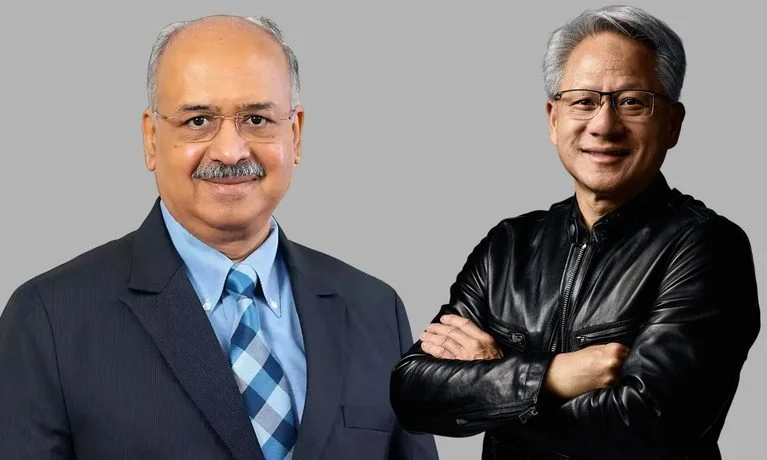
The businesses associated with Dilip Shanghvi and Jensen Huang operate at very different scales and in different economic sectors.
Sun Pharma is a global pharmaceutical company whose products serve healthcare markets in numerous countries. Its business includes generic medicines, specialty medicines, and other pharmaceutical activities.
NVIDIA is a global technology company whose platforms support computing-intensive applications, including AI and data-center workloads.
Because these companies operate in different sectors, direct comparisons of revenue, valuation, or market capitalization can be misleading. The more useful comparison is how each company created value within its own industry.
Dilip Shanghvi and Jensen Huang: Approach to Risk
Risk management has been an important part of both careers.
Pharmaceutical companies face regulatory, scientific, manufacturing, patent, and market risks. Shanghvi’s strategy has involved acquisitions and expansion while maintaining a focus on pharmaceutical markets.
McKinsey’s interview with Shanghvi describes his approach as involving calculated risks and a focus on long-term stability.
Technology companies face different risks, including rapid technological change, intense competition, supply-chain challenges, and uncertain demand for emerging technologies.
Huang’s decision to maintain NVIDIA’s focus on accelerated computing positioned the company to benefit as AI workloads expanded, while also exposing it to the volatility and competitive pressures of the semiconductor industry.
Dilip Shanghvi and Jensen Huang: Technology and the Future
The future relevance of Dilip Shanghvi and Jensen Huang is likely to remain connected to innovation.
For Sun Pharma, important areas include specialty medicines, research, drug development, global healthcare access, and pharmaceutical manufacturing.
For NVIDIA, major areas include AI computing, robotics, data centers, accelerated computing, and software ecosystems.
NVIDIA has recently continued expanding its focus on AI and safety technologies. Recent reporting has also highlighted the company’s efforts around AI-agent security and infrastructure.
These developments demonstrate how quickly Huang’s technology sector continues to evolve.
Dilip Shanghvi and Jensen Huang: Influence on Entrepreneurship
The careers of Dilip Shanghvi and Jensen Huang provide different examples for entrepreneurs.
Shanghvi’s journey demonstrates the importance of understanding a specific market deeply before expanding. His pharmaceutical experience helped him identify opportunities in manufacturing and specialized medicines.
Huang’s story illustrates the importance of investing in technological platforms that may have applications beyond their original purpose.
For entrepreneurs, the broader lesson is that company-building can take many forms. Some businesses grow through acquisitions and geographic expansion, while others grow through technological ecosystems and developer adoption.
Dilip Shanghvi and Jensen Huang: Company Culture
Company culture is another important part of their stories.
Sun Pharma’s development has involved building teams capable of operating across different countries, regulatory systems, therapeutic areas, and commercial markets.
McKinsey’s discussion with Shanghvi emphasizes the importance of collaboration and building a loyal team capable of learning and adapting.
NVIDIA’s culture has been strongly associated with engineering, research, technical innovation, and accelerated computing. The company’s long-term investment in GPUs required maintaining a strong technical organization while adapting to new computing opportunities.
In both companies, people and expertise have been essential to turning strategic ideas into products and services.
Dilip Shanghvi and Jensen Huang: Lessons From Their Careers
Several practical lessons can be identified from the careers of Dilip Shanghvi and Jensen Huang.
Focus on a Core Opportunity
Shanghvi concentrated on pharmaceuticals, while Huang concentrated on computing technology.
Think Beyond the Original Market
Sun Pharma expanded internationally and into additional therapeutic areas. NVIDIA expanded from graphics into accelerated computing and AI.
Build for the Long Term
Both companies required decades of development.
Adapt to Market Changes
Healthcare and technology are constantly changing. Both organizations have had to adapt their strategies accordingly.
Invest in Expertise
Scientific, technical, commercial, and managerial expertise are central to both businesses.
Understand Risk
Both careers demonstrate that major business expansion involves risk, but risk can be managed through research, planning, experience, and disciplined decision-making.
Dilip Shanghvi and Jensen Huang: Their Different Paths to Global Recognition
The stories of Dilip Shanghvi and Jensen Huang also show how geography and industry can influence entrepreneurial success.
Shanghvi became one of India’s best-known business leaders through pharmaceuticals. His company became an important global Indian healthcare enterprise.
Huang became one of the world’s most recognizable technology executives through NVIDIA’s rise in graphics, accelerated computing, and AI.
Their paths were not identical. Shanghvi built his company during the transformation of India’s pharmaceutical sector, while Huang built NVIDIA during major shifts in personal computing, graphics, data centers, and artificial intelligence.
Dilip Shanghvi and Jensen Huang: Why Their Stories Matter
The continuing interest in Dilip Shanghvi and Jensen Huang reflects a wider interest in entrepreneurs who transformed specialized businesses into global organizations.
Shanghvi’s story is particularly relevant to healthcare entrepreneurship, pharmaceutical strategy, acquisitions, and international business.
Huang’s story is especially relevant to semiconductor technology, AI infrastructure, engineering leadership, and technological disruption.
Together, their careers illustrate two different forms of innovation.
One is based on medicines and healthcare. The other is based on computation and artificial intelligence.
Both demonstrate that major businesses can emerge from specialized technologies and markets when leaders remain focused on long-term opportunities.
Dilip Shanghvi and Jensen Huang: Current Roles
As of 2026, Dilip Shanghvi remains closely associated with Sun Pharmaceutical Industries as Executive Chairman. Sun Pharma’s official board information identifies him in that role and notes his continued involvement with the company’s strategic direction.
Jensen Huang remains NVIDIA’s founder and CEO. NVIDIA’s official biography confirms that he continues to serve as president, chief executive officer, and board member.
Their continued involvement is notable because both companies have become much larger and more complex than the organizations they originally established.
Dilip Shanghvi and Jensen Huang: A Comparison of Their Business Journeys
A factual comparison highlights the differences clearly.
| Area | Dilip Shanghvi | Jensen Huang |
|---|---|---|
| Main Industry | Pharmaceuticals | Semiconductors and computing |
| Major Company | Sun Pharmaceutical Industries | NVIDIA |
| Company Founded | 1983 | 1993 |
| Educational Background | Commerce | Electrical Engineering |
| Main Business Focus | Medicines and healthcare | GPUs, accelerated computing and AI |
| Expansion Strategy | Organic growth, acquisitions and international expansion | Technology development, platforms and ecosystem expansion |
| Global Reach | More than 100 countries | Global technology ecosystem |
| Leadership Role | Founder and Executive Chairman | Founder and CEO |
This comparison shows why Dilip Shanghvi and Jensen Huang are often interesting subjects for business-focused readers. Their companies operate in different sectors, yet both have achieved substantial international influence.
Dilip Shanghvi and Jensen Huang: The Importance of Adaptation
Adaptation may ultimately be one of the strongest themes connecting these two entrepreneurs.
Sun Pharma did not remain limited to its earliest products. It expanded into new therapeutic areas, markets, research programs, and acquisitions.
NVIDIA did not remain limited to the original PC graphics market. Its GPU technology became increasingly important in data centers, machine learning, scientific computing, robotics, and AI.
This ability to evolve is important because businesses rarely operate in static environments.
Customer requirements change. Technologies change. Regulations change. Competitors change. New opportunities emerge.
The histories of Dilip Shanghvi and Jensen Huang demonstrate how long-term businesses can evolve while retaining a clear core identity.
Dilip Shanghvi and Jensen Huang: Looking Ahead
The next phase of Sun Pharma’s development will involve continued pharmaceutical innovation, international operations, specialty medicines, research, and competition across global healthcare markets.
For NVIDIA, the future remains closely connected to AI, accelerated computing, robotics, data centers, and the development of increasingly sophisticated computing systems.
The two companies therefore represent different parts of the modern economy.
Healthcare depends on scientific research and pharmaceutical innovation. The AI economy depends heavily on computing infrastructure and semiconductor technology.
As these industries continue developing, the business legacies of Shanghvi and Huang will remain useful examples of how specialized companies can achieve global scale.
Conclusion: Dilip Shanghvi and Jensen Huang
The stories of Dilip Shanghvi and Jensen Huang offer two distinct examples of modern entrepreneurship.
Dilip Shanghvi built Sun Pharmaceutical Industries from a relatively small pharmaceutical operation into a global healthcare company. His career has been shaped by pharmaceuticals, acquisitions, international expansion, research, and long-term business development. Sun Pharma identifies him as its founder and Executive Chairman, while McKinsey has highlighted his focus on calculated risk, adaptation, and long-term stability.
Jensen Huang co-founded NVIDIA in 1993 and has led the company throughout its transformation from a graphics-focused semiconductor business into a major force in accelerated computing and artificial intelligence. NVIDIA confirms that Huang has served as CEO since the company’s founding.
Their industries may be completely different, but both careers demonstrate the importance of specialized knowledge, innovation, persistence, adaptation, and long-term strategy.
For readers interested in business history, entrepreneurship, technology, healthcare, or global companies, Dilip Shanghvi and Jensen Huang provide two compelling examples of how focused leadership can shape organizations over several decades.