
Christopher Nolan and Peyton Manning are two highly accomplished figures who reached the highest levels of their respective industries. Nolan transformed modern filmmaking through ambitious storytelling, practical effects, complex narratives, and visually powerful cinema. Manning, meanwhile, became one of the most respected quarterbacks in American football, known for his intelligence, preparation, leadership, and ability to understand the game at an extraordinary level.
At first glance, Christopher Nolan and Peyton Manning may appear to have little in common. One built a career behind the camera, while the other spent decades competing on football fields. Their professional environments, audiences, and daily responsibilities were dramatically different. Yet both careers demonstrate the importance of preparation, discipline, creativity, leadership, and an exceptional commitment to mastering a craft.
The interest surrounding Christopher Nolan and Peyton Manning can therefore be understood as a comparison between two influential personalities who operated at the top of very different fields. Rather than focusing on an assumed partnership or personal relationship, it is more useful to examine what their careers reveal about achievement, pressure, decision-making, and long-term success.
Christopher Nolan and Peyton Manning: Two Different Paths to Excellence
Christopher Nolan established himself as a filmmaker who consistently challenged conventional approaches to storytelling. From independent productions to major Hollywood blockbusters, he developed a reputation for making films that combine commercial appeal with intellectual ambition.
Peyton Manning followed a completely different path. Born into a football family, Manning developed into a quarterback whose preparation and understanding of football became central to his identity. His career included successful periods with both the Indianapolis Colts and Denver Broncos, and he ultimately retired as one of the most accomplished quarterbacks in NFL history.
When examining Christopher Nolan and Peyton Manning together, the most interesting connection is not a specific professional collaboration. Instead, it is the similarity in their approach to excellence. Both became known for taking preparation seriously and demanding a high level of performance from themselves and the people around them.
Their careers also demonstrate that success rarely comes from talent alone. Nolan had to develop his directing, writing, producing, and visual storytelling abilities. Manning had to develop physical skills, tactical knowledge, leadership qualities, and the ability to perform under extreme pressure.
The Early Career of Christopher Nolan
Christopher Nolan was born in London in 1970 and developed an interest in filmmaking at a young age. He began creating short films with relatively simple equipment before eventually moving toward professional filmmaking.
His early feature film Following, released in 1998, was produced on a small scale. Although it was far removed from the enormous productions that would later define his career, the film demonstrated Nolan’s interest in nonlinear storytelling, mystery, crime, and unreliable perspectives.
His breakthrough came with Memento, released in 2000. The film attracted widespread attention because of its unusual narrative structure. Rather than telling its story in a conventional chronological sequence, Nolan used fragmented storytelling to place the audience inside the protagonist’s experience.
Memento became an important turning point. It demonstrated that a filmmaker could create a commercially accessible thriller while also challenging viewers intellectually.
Nolan subsequently directed increasingly ambitious projects, including Insomnia, Batman Begins, The Prestige, The Dark Knight, Inception, The Dark Knight Rises, Interstellar, Dunkirk, Tenet, and Oppenheimer.
His career has been characterized by a willingness to work on large-scale productions while maintaining significant creative control over storytelling.
The Early Career of Peyton Manning
Peyton Manning was born in New Orleans, Louisiana, in 1976. Football was already a major part of his family background because his father, Archie Manning, had enjoyed a successful NFL career.
Rather than simply relying on his family name, Peyton developed his own reputation through years of preparation and competition. He attended the University of Tennessee, where he became one of college football’s most recognizable quarterbacks.
Manning entered the NFL in 1998 after being selected first overall by the Indianapolis Colts. The expectations were enormous. A first overall pick is expected to become a franchise leader, and Manning faced immediate pressure to perform.
His professional career eventually established him as one of the defining quarterbacks of his generation.
He won five NFL MVP awards, a record that illustrates the consistency of his performance. Manning also won two Super Bowl championships, with his first coming with Indianapolis and his second with Denver.
His ability to analyze defenses, change plays at the line of scrimmage, and communicate with teammates became a defining part of his playing style.
Christopher Nolan and Peyton Manning: The Power of Preparation
One of the strongest similarities between Christopher Nolan and Peyton Manning is preparation.
Nolan is known for carefully developing the worlds, characters, themes, and visual structures of his films. His productions frequently involve extensive planning because large-scale filmmaking requires hundreds or thousands of people to work toward a common creative objective.
Manning’s preparation was equally important, although it took place in a completely different environment.
Quarterbacks must study opponents, understand defensive formations, memorize plays, analyze game situations, and make rapid decisions during competition. Manning became famous for his intense film study and preparation.
This makes Christopher Nolan and Peyton Manning an interesting pair when discussing professional discipline.
Neither achieved long-term success simply by appearing talented. Both developed systems that allowed them to perform consistently.
For Nolan, preparation could involve scripts, storyboards, location planning, production design, camera systems, and editing decisions. For Manning, preparation could involve game film, playbooks, defensive tendencies, practice repetitions, and communication with coaches and teammates.
The environments were different, but the underlying principle was remarkably similar: preparation creates confidence when pressure arrives.
Storytelling and Strategic Thinking
Christopher Nolan’s films frequently involve characters who must interpret information and make difficult decisions. His stories often explore memory, time, identity, morality, science, war, and human ambition.
Manning’s profession required another form of strategic thinking.
A quarterback must process information quickly. Before the snap, Manning would examine the defensive alignment and determine whether the planned play remained appropriate. If necessary, he could change the play or adjust the protection.
In this sense, both Nolan and Manning worked in environments where information mattered enormously.
Nolan controls information through storytelling. He decides what the audience sees, when it is revealed, and how different pieces of information connect.
Manning processed information during games and used it to make decisions that could change the outcome of a play.
Their professions therefore demonstrate two very different forms of strategic intelligence.
Christopher Nolan and Peyton Manning: Handling Pressure
Pressure is another important theme when comparing Christopher Nolan and Peyton Manning.
A major Hollywood filmmaker faces enormous expectations. A blockbuster production can require years of development and a substantial financial investment. Once a film reaches theaters, its creative choices are examined by critics, audiences, industry professionals, and fans.
Nolan experienced this pressure repeatedly as the scale of his projects increased.
Films such as The Dark Knight, Inception, Interstellar, Dunkirk, and Oppenheimer generated enormous public interest. Each project carried expectations created by Nolan’s previous successes.
Manning faced a different kind of pressure.
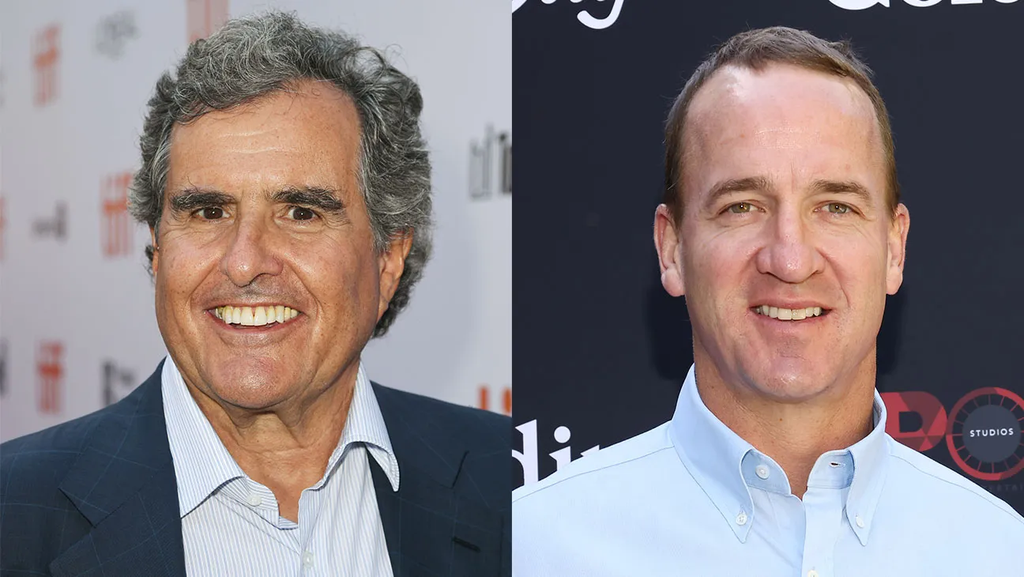
NFL quarterbacks are evaluated every week, and their performances can influence the result of an entire season. A quarterback is often expected to lead the offense, communicate with teammates, respond to mistakes, and perform in high-pressure moments.
The comparison between Christopher Nolan and Peyton Manning therefore highlights an important lesson: elite professionals must learn how to function when expectations are extremely high.
The Importance of Leadership
Leadership played a major role in both careers.Christopher Nolan and Peyton Manning
Nolan’s productions depend on collaboration. A director cannot personally operate every camera, construct every set, create every costume, manage every visual effect, or perform every technical task. Instead, a director must communicate a creative vision to a large team.
Nolan’s long-term collaborations with actors, cinematographers, editors, composers, production designers, and other professionals have been an important part of his filmmaking career.
Manning’s leadership was more direct because football is a team sport with immediate competition.
As quarterback, he was often viewed as one of the central leaders of his team. His communication with teammates and coaches was essential to the operation of the offense.
His leadership style was strongly associated with preparation and knowledge.
Rather than relying only on emotional motivation, Manning often demonstrated leadership through understanding the game and helping teammates execute their responsibilities.
Christopher Nolan’s Approach to Filmmaking
Nolan’s filmmaking philosophy is closely associated with practical filmmaking techniques, large-format photography, elaborate sets, and carefully constructed visual sequences.
Although computer-generated imagery is part of modern filmmaking, Nolan has frequently emphasized practical methods when they can produce the desired result.
His films also often contain complex narrative structures.Christopher Nolan and Peyton Manning
Inception explores dreams and layered realities. Interstellar combines family drama with science fiction. Dunkirk uses multiple timelines to portray the evacuation of Allied troops during World War II. Tenet plays with the concept of time inversion. Oppenheimer explores the life and historical legacy of J. Robert Oppenheimer.
This creative approach has made Nolan one of the most recognizable contemporary filmmakers.
Peyton Manning’s Approach to Football
Manning’s approach to football was similarly analytical.
He was particularly famous for his ability to diagnose defenses before the snap. This skill allowed him to identify potential problems and make adjustments.
His command of the offense became one of the defining features of his career.
Manning also developed a reputation for studying opponents extensively. His success was not based purely on physical ability. He relied heavily on preparation, understanding, communication, and anticipation.
As he grew older, these mental skills became even more important.
Quarterbacks naturally face physical challenges as their careers progress, but Manning’s understanding of football allowed him to remain highly effective throughout a long career.
Christopher Nolan and Peyton Manning: Reinvention Over Time
Long careers require adaptation.
Nolan changed the scale and scope of his filmmaking without abandoning his interest in complex storytelling. His early independent work eventually led to some of the largest productions in modern cinema.
At the same time, his films continued to feature themes that had appeared throughout his career.
Manning also adapted.
He spent the first portion of his NFL career with the Indianapolis Colts and later joined the Denver Broncos. Moving to a new team late in his career required adjustment to a different organization, coaching environment, and group of teammates.
His final NFL season ended with a Super Bowl victory.
The careers of Christopher Nolan and Peyton Manning therefore demonstrate how reinvention can be part of sustained success.
The Role of Technology
Technology has influenced both filmmaking and professional football.
Nolan has used sophisticated filmmaking technology while often maintaining an interest in traditional cinematic techniques. Large-format cameras, advanced sound recording, visual effects, and modern post-production tools have all contributed to his work.
Football has also become increasingly data-driven.
Teams use video analysis, statistics, tracking systems, and other technologies to understand performance. Manning’s career began before many of today’s advanced analytical tools became standard, yet his personal approach to studying opponents already reflected a highly analytical mindset.
In both fields, technology can provide information, but human decision-making remains essential.
Why Christopher Nolan and Peyton Manning Continue to Attract Attention
The careers of Christopher Nolan and Peyton Manning remain relevant because both achieved remarkable longevity and recognition.
Nolan continues to be discussed whenever audiences debate influential modern filmmakers. His movies are frequently analyzed for their themes, structure, visual style, and technical ambition.
Manning remains influential because of his accomplishments as an NFL quarterback and his transition into media and entertainment after retirement.
Both figures have also developed recognizable public identities.
Nolan is associated with ambitious filmmaking and intellectual storytelling.
Manning is associated with football intelligence, humor, preparation, leadership, and an extensive post-playing career in television and business.
Their continued visibility demonstrates how exceptional careers can remain culturally significant even after individual projects or playing seasons have ended.
Christopher Nolan and Peyton Manning in Popular Culture
Popular culture often places successful people from different industries side by side because comparisons can reveal unexpected similarities.
Christopher Nolan represents the world of cinema, where creative decisions can influence how millions of people experience a story.
Peyton Manning represents professional sports, where individual decisions can influence the outcome of highly competitive games.
Both became recognizable beyond their primary professions.
Nolan’s name became a selling point for movie audiences. Manning became recognizable even among people who did not closely follow every NFL game.
This broader recognition is one of the reasons the phrase Christopher Nolan and Peyton Manning can attract curiosity. Their names represent two different forms of achievement that invite comparison.
A Comparison of Their Professional Strengths
When looking at Christopher Nolan and Peyton Manning side by side, several professional qualities stand out.
Vision
Nolan’s vision is evident in the worlds and narratives he creates. He often begins with ambitious concepts and develops them into large cinematic experiences.
Manning’s vision appeared in his understanding of football strategy. He had to anticipate what defenses might do and determine how his offense should respond.
Preparation
Preparation was central to both careers.
Nolan’s productions require extensive planning before cameras begin rolling.
Manning prepared through practice, film study, meetings, and game planning.
Communication
Nolan communicates ideas to large creative teams.
Manning communicated plays, adjustments, and strategic decisions to teammates.
Adaptability
Nolan moved between independent films, superhero movies, science fiction, historical drama, and other genres.
Manning adapted to different opponents, coaching systems, teammates, and eventually a new NFL organization.
Consistency
Both built reputations over many years rather than through a single achievement.
That consistency is perhaps one of the most important characteristics connecting their careers.
The Legacy of Christopher Nolan
Christopher Nolan’s legacy is already firmly established within modern cinema.
His films have influenced discussions about practical effects, large-format filmmaking, narrative complexity, and the relationship between popular entertainment and serious storytelling.
His work also demonstrated that major studio productions could challenge audiences intellectually while remaining commercially successful.
The critical and commercial response to Oppenheimer further strengthened his reputation.
The film became a major cultural event and earned significant recognition, including multiple Academy Awards. Nolan himself received the Academy Award for Best Director for the film.
His career illustrates the possibility of maintaining a distinctive creative identity while working on increasingly ambitious productions.
The Legacy of Peyton Manning
Peyton Manning’s legacy is equally significant within American football.
He finished his career with numerous passing records and individual honors, including five NFL MVP awards. He also won two Super Bowls with two different franchises.
His ability to lead offenses and understand defensive strategies helped shape how the quarterback position was viewed.
After retiring from football, Manning successfully transitioned into media and entertainment. His work in television, interviews, advertising, and sports programming has allowed him to remain a prominent public figure.
His post-playing career also demonstrates that professional identity does not necessarily end when an athlete leaves competition.
Christopher Nolan and Peyton Manning: Lessons From Their Careers
There are several broader lessons that can be drawn from the careers of Christopher Nolan and Peyton Manning.
First, preparation matters.
Talent can create opportunities, but consistent preparation helps professionals take advantage of them.
Second, mastery requires patience.
Neither Nolan nor Manning became an icon immediately. Their reputations developed through years of work.
Third, adaptation is necessary.
Industries change, audiences change, competitors change, and technology changes. Successful professionals must be willing to evolve.
Fourth, leadership extends beyond personal performance.
Nolan’s films depend on large teams, while Manning’s success depended on teammates, coaches, and support staff.
Finally, reputation is built through consistency.
One successful film or one great football season can create attention, but sustained excellence creates a legacy.
Are Christopher Nolan and Peyton Manning Connected Professionally?
It is important to distinguish public curiosity from confirmed professional collaboration.
Christopher Nolan and Peyton Manning are primarily known for completely different professional careers. Nolan’s career is centered on filmmaking, while Manning’s career was built around professional football and later media work.
There is no widely established basis for describing them as regular professional collaborators or as members of the same primary industry.
The value of discussing Christopher Nolan and Peyton Manning therefore comes from comparing their careers rather than assuming a direct partnership.
Both provide examples of individuals who reached exceptional levels through specialization, preparation, discipline, and leadership.
Why Their Stories Remain Inspiring
The stories of Nolan and Manning are compelling because they demonstrate two different definitions of excellence.
Nolan’s work requires imagination. He must create stories, visual worlds, characters, and experiences that audiences have never seen before.
Manning’s work required precision. He had to understand a constantly changing game and make accurate decisions under intense pressure.
Creativity and precision may seem unrelated, but both require deep concentration.
A filmmaker needs to understand how individual creative decisions affect an entire production. A quarterback needs to understand how an individual decision can affect an entire play.
In both cases, the best results come from seeing the bigger picture.
Christopher Nolan and Peyton Manning: A Study in Excellence
Ultimately, Christopher Nolan and Peyton Manning represent two different paths toward professional excellence.
Nolan became a major force in cinema by developing a distinctive filmmaking style and consistently pursuing ambitious projects.
Manning became an NFL legend through preparation, intelligence, leadership, consistency, and an extraordinary understanding of football.
Their careers do not need to be connected by a shared project to make an interesting comparison.
Instead, their similarities can be found in the principles behind their success.
Both understood that preparation creates opportunities. Both developed systems for dealing with pressure. Both relied on collaboration. Both adapted when circumstances changed. And both built reputations that extended beyond a single achievement.
For anyone interested in success stories, the comparison between Christopher Nolan and Peyton Manning offers a valuable reminder that excellence can take many forms.
One can be achieved through storytelling, another through sport, another through science, business, technology, or any other field. The underlying principles remain surprisingly similar.
Final Thoughts on Christopher Nolan and Peyton Manning
Christopher Nolan and Peyton Manning built extraordinary careers in completely different worlds. Nolan transformed his ideas into films that challenged and entertained global audiences, while Manning transformed preparation and football intelligence into one of the most successful quarterback careers of his generation.
Their professional journeys demonstrate the importance of vision, discipline, preparation, leadership, adaptability, and consistency.
Although they should not be presented as direct collaborators without reliable evidence, examining Christopher Nolan and Peyton Manning together provides an interesting look at how two highly accomplished individuals approached their crafts.
Nolan’s legacy is written through cinema. Manning’s legacy is recorded through football history.
Both show that reaching the highest level is only one part of success. Staying there, adapting to new challenges, maintaining discipline, and building a lasting reputation are what turn a successful career into a lasting legacy.
That is ultimately what makes Christopher Nolan and Peyton Manning such an interesting comparison: their professions may be worlds apart, but the qualities behind their achievements reveal a powerful common ground.