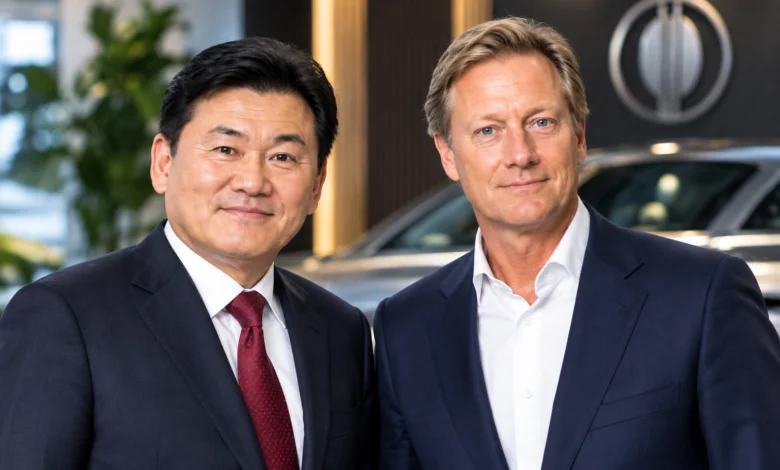
The names hiroshi mikitani and henrik fisker represent two very different approaches to entrepreneurship, innovation, and global business. One built a vast digital ecosystem beginning with online commerce in Japan, while the other became internationally recognized for designing luxury automobiles and pursuing a future centered on electric vehicles. Their industries, professional backgrounds, and business models are remarkably different, yet both careers demonstrate how ambitious ideas can challenge established markets.
Hiroshi Mikitani is best known as the founder, chairman, and chief executive officer of Rakuten Group, one of Japan’s most recognizable technology and internet companies. Mikitani launched Rakuten in 1997 after leaving the world of investment banking and building his own consulting business. Over time, Rakuten expanded from an online marketplace into a broad ecosystem covering e-commerce, fintech, communications, digital content, mobile services, sports, and other businesses. Rakuten currently describes itself as having more than 70 businesses across these areas.
Henrik Fisker followed a completely different path. Born in Denmark, Fisker developed a passion for automobiles at an early age and eventually became a celebrated automotive designer. His professional portfolio includes important work associated with BMW, Aston Martin, and Ford. He later founded companies carrying his name and pursued the development of electric vehicles, including the Fisker Karma and the Fisker Ocean.
There is no clear public evidence establishing a major business partnership or joint venture between Hiroshi Mikitani and Henrik Fisker. Instead, the interest in these two names comes from the broader comparison between two entrepreneurs who attempted to reshape traditional industries through technology, innovation, international expansion, and strong personal visions.
Who Are Hiroshi Mikitani and Henrik Fisker?
Understanding hiroshi mikitani and henrik fisker begins with recognizing the different industries that shaped their careers.
Hiroshi Mikitani was born on March 11, 1965, in Kobe, Japan. He studied at Hitotsubashi University and later earned an MBA from Harvard Business School. Before becoming an entrepreneur, he worked at the Industrial Bank of Japan. According to Harvard Business School, Mikitani’s experience at Harvard played an important role in changing his perspective on entrepreneurship and encouraged him to consider starting his own company.hiroshi mikitani and henrik fisker
Mikitani established Rakuten in 1997. The original business was an online shopping marketplace designed to give merchants a relatively accessible way to reach consumers through the internet. Rakuten’s name became increasingly associated with digital commerce, and the company eventually expanded far beyond its original marketplace model.
Henrik Fisker, meanwhile, was born on August 10, 1963, in Allerød, Denmark. He studied transportation design at the ArtCenter College of Design and began his automotive design career at BMW in Germany. His later career included influential design roles at Aston Martin and Ford. His work helped establish him as a designer associated with elegant, performance-oriented automobiles.
The contrast is immediately apparent. Mikitani focused on platforms, commerce, connectivity, and digital services. Fisker focused on physical products, industrial design, transportation, and automotive technology.hiroshi mikitani and henrik fisker
Hiroshi Mikitani and Henrik Fisker: Different Industries, Similar Ambition
The story of hiroshi mikitani and henrik fisker is interesting because neither entrepreneur simply accepted the established way of doing business.
Mikitani entered Japanese business during a period when traditional corporations held enormous influence. Rather than following a conventional long-term corporate career, he chose entrepreneurship. His goal was to use the internet to create new opportunities for merchants and consumers.
Rakuten’s early marketplace concept was particularly significant because it focused on merchants rather than simply attempting to become a conventional online retailer. The company has described its marketplace as one of the world’s early merchant-focused e-commerce platforms.hiroshi mikitani and henrik fisker
Fisker’s ambition was similarly centered on changing expectations. He believed automobile design could combine emotional appeal with new technologies and sustainability. His interest in electric and electrified vehicles became one of the defining themes of his later career.
In both cases, the entrepreneur’s personal vision became closely associated with the company or platform being built.hiroshi mikitani and henrik fisker
The Early Life of Hiroshi Mikitani
Hiroshi Mikitani’s path toward entrepreneurship was not immediately obvious.
He initially entered banking after graduating from university. He joined the Industrial Bank of Japan in 1988, according to Rakuten’s official biography. He later studied at Harvard Business School and received his MBA in 1993.
Harvard Business School describes Mikitani’s decision to leave banking and pursue entrepreneurship as an unconventional move in the context of Japanese corporate culture at the time. His experience studying entrepreneurship at Harvard helped influence his thinking about starting a company.
In 1996, he established Crimson Group. One year later, he founded the business that became Rakuten. This sequence shows how his career moved from finance toward entrepreneurship and eventually toward internet-based commerce.
The timing was important. Japan’s internet economy was still developing, and online shopping was far from the dominant force it would later become.hiroshi mikitani and henrik fisker
The Early Life of Henrik Fisker
Henrik Fisker’s relationship with automobiles began when he was young.
According to the Los Angeles Times, Fisker became fascinated with cars after seeing a Maserati while riding in his father’s Saab. That early fascination eventually developed into an ambition to become an automobile designer.
He studied transportation design and entered the automotive industry through BMW. His career subsequently took him to some of the most influential design organizations in the automotive world.
At Aston Martin, Fisker served as design director and was involved with designs including the Aston Martin V8 Vantage and the production launch design of the DB9. Earlier, at BMW, he was associated with the BMW Z07 concept and the Z8 roadster. His career also included senior design positions at Ford.hiroshi mikitani and henrik fisker
This background gave Fisker a rare combination of creative design experience and executive exposure to major automotive organizations.
Hiroshi Mikitani and the Creation of Rakuten
One of the most important chapters in the story of hiroshi mikitani and henrik fisker is the way each entrepreneur created a recognizable business identity.
Mikitani’s most important early creation was Rakuten Ichiba. Rakuten was founded in February 1997, while the marketplace launched in May of that year. Rakuten says its original mission was connected to innovation and entrepreneurship and that the company initially focused on creating an online marketplace.
The concept was straightforward but ambitious: create a digital marketplace where businesses could sell products online without having to build the entire infrastructure themselves.
As internet adoption increased, the marketplace grew. Rakuten eventually expanded into travel, banking, credit cards, securities, digital content, telecommunications, professional sports, and other sectors.
This transformation is one of the defining characteristics of Mikitani’s career. Rather than treating Rakuten as a single online store, he developed it into an interconnected business ecosystem.hiroshi mikitani and henrik fisker
Henrik Fisker and the World of Automotive Design
Henrik Fisker’s reputation was built first through design rather than corporate technology.
His work demonstrated how automobile design can influence the identity of a vehicle. The cars associated with Fisker’s career often emphasized distinctive proportions, elegant lines, and a premium visual character.
His work at Aston Martin became particularly influential. The V8 Vantage and DB9 helped establish a design language that became closely associated with the brand during that period. His earlier work at BMW also included the Z8, a vehicle remembered for its combination of modern engineering and retro-inspired design cues.
Fisker eventually wanted to go beyond designing cars for established manufacturers. He wanted to build vehicles under his own vision.
That ambition eventually led to Fisker Automotive.
Hiroshi Mikitani and Henrik Fisker as Entrepreneurs
When discussing hiroshi mikitani and henrik fisker, it is useful to separate their identities as designers, executives, and founders.
Mikitani’s entrepreneurial strategy centered on creating a platform and then expanding into adjacent industries. His approach involved building an ecosystem in which different services could reinforce the overall Rakuten brand.
Fisker’s entrepreneurial strategy was more product-centered. His vision revolved around designing and producing automobiles that represented a different approach to luxury and sustainability.
These differences created different challenges.hiroshi mikitani and henrik fisker
A digital marketplace can expand through software, partnerships, merchants, and infrastructure. Automobile manufacturing requires factories, suppliers, logistics, regulatory approvals, financing, engineering, quality control, and large-scale production.
That difference helps explain why their entrepreneurial journeys developed in very different ways.
The Fisker Karma and Henrik Fisker’s Automotive Vision
The Fisker Karma became one of the most recognizable products associated with Henrik Fisker’s early automotive entrepreneurship.
Fisker Automotive was founded in 2007. The company focused on developing premium electrified vehicles, with the Karma serving as its flagship model.
The idea was ambitious for its time. Electric and plug-in hybrid technology was becoming increasingly important, but the premium electric vehicle market was still relatively young.
The Karma attempted to combine dramatic styling with electrified propulsion and luxury positioning.
Fisker’s career demonstrated that automotive innovation is not only about mechanical engineering. Design, branding, customer expectations, manufacturing, and financial sustainability all have to work together.
The company eventually encountered major financial and production challenges, and Fisker left Fisker Automotive in 2013.
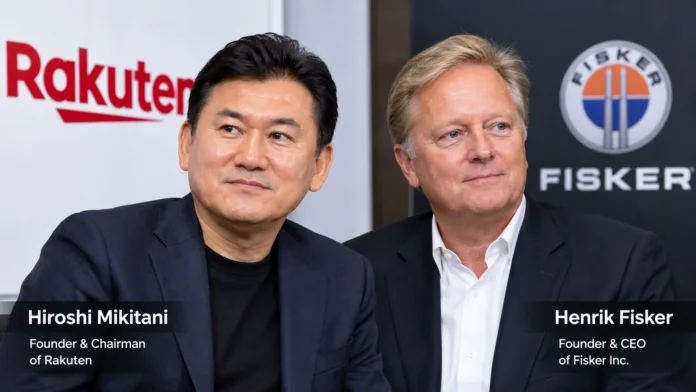
Hiroshi Mikitani and the Expansion of Rakuten
While Fisker’s companies remained heavily focused on automobiles, Mikitani continued broadening Rakuten.
Today, Rakuten describes its ecosystem as covering more than 70 businesses across areas including e-commerce, digital content, communications, and fintech.
Rakuten’s expansion also entered telecommunications. Rakuten Mobile became Japan’s newest mobile network operator in 2019, adding another major business area to the group’s portfolio.hiroshi mikitani and henrik fisker
Mikitani has also maintained involvement in sports and cultural organizations. His official Rakuten biography lists leadership roles connected with Rakuten Vissel Kobe, Rakuten Baseball, and the Tokyo Philharmonic Orchestra.
This illustrates how different his entrepreneurial model became from a conventional technology startup.
Instead of concentrating on a single product, Rakuten developed a network of services that could reach customers through different aspects of everyday life.
Hiroshi Mikitani and Henrik Fisker: Innovation as a Common Theme
The phrase hiroshi mikitani and henrik fisker brings together two people whose professional stories share an important theme: innovation.
For Mikitani, innovation involved changing how merchants and consumers interacted through digital commerce. His company later expanded that philosophy into financial services, communications, content, and other fields.
For Fisker, innovation involved rethinking the automobile through design, electrification, and new approaches to vehicle development.
However, innovation does not automatically guarantee commercial success.
Both stories demonstrate that an innovative idea must also survive the practical realities of execution.
For Rakuten, this meant managing a complex ecosystem across multiple industries. For Fisker’s automotive ventures, it meant overcoming the enormous technical and financial requirements of vehicle production.hiroshi mikitani and henrik fisker
Fisker Inc. and the Electric Vehicle Era
Henrik Fisker’s second major automotive company was Fisker Inc., which he co-founded in 2016.
The company returned him to the center of the electric vehicle conversation. Its most prominent product became the Fisker Ocean, an electric SUV.
The Ocean attracted attention for its styling, technology, and environmental positioning. However, Fisker Inc. faced severe financial and operational difficulties.hiroshi mikitani and henrik fisker
In June 2024, Fisker Inc. and subsidiaries commenced Chapter 11 bankruptcy proceedings in the United States. The company’s SEC filing documents the bankruptcy cases, while Reuters reported that the company had struggled with production, cash requirements, and financing.
The bankruptcy became an important part of Fisker’s business history because it demonstrated the gap that can sometimes exist between designing an appealing product and successfully scaling an automotive company.
The Business Lessons Behind Hiroshi Mikitani and Henrik Fisker
There are several useful business themes within the stories of hiroshi mikitani and henrik fisker.
The first is that entrepreneurship often begins with identifying a change before it becomes obvious to everyone else.
Mikitani recognized the potential of online commerce in Japan when the market was still developing. Fisker recognized the growing importance of electrification and sought to bring his design philosophy into that emerging market.
The second lesson is that execution matters as much as vision.
Rakuten had to develop infrastructure, attract merchants, build consumer trust, expand into new industries, and manage a large corporate ecosystem.
Fisker’s companies had to solve much more complicated manufacturing challenges, including vehicle production, supply chains, engineering, regulatory compliance, financing, and distribution.
The third lesson is that business models matter.
Mikitani built around a platform model. Fisker built around physical products and manufacturing.
The risks associated with each model are very different.
Hiroshi Mikitani’s Leadership at Rakuten Today
As of April 1, 2026, Rakuten Group lists Hiroshi Mikitani as Representative Director, Chairman, President, and CEO.
Rakuten’s current corporate information says the company was founded in 1997 and has developed into an ecosystem with more than 70 businesses. The company also reports a broad international presence and operations covering several major digital sectors.
Mikitani remains strongly associated with Rakuten’s entrepreneurial culture.
His leadership philosophy emphasizes experimentation, innovation, and encouraging people to pursue ambitious ideas. Rakuten’s leadership material quotes Mikitani encouraging people to think about how they can achieve something and then try to do it.
That philosophy helps explain why Rakuten expanded beyond its original online marketplace.
Henrik Fisker’s Design Legacy
Henrik Fisker’s legacy is more closely connected with automobile design and the attempt to combine aesthetics with new technology.
His designs for BMW and Aston Martin established his reputation before he moved into entrepreneurship. His later companies allowed him to pursue his own ideas rather than simply designing products for established manufacturers.
Although Fisker Inc.’s financial difficulties became a major part of the company’s history, his influence as a designer remains distinct from the later business outcome.
Design and manufacturing are related but different disciplines. A designer can create a compelling vehicle concept, but turning that concept into a sustainable mass-production business requires a much broader organization.
Fisker’s career provides a clear example of that distinction.
Hiroshi Mikitani and Henrik Fisker: Technology and Design
Another way to understand hiroshi mikitani and henrik fisker is through the relationship between technology and design.
Mikitani’s work has been centered heavily on digital platforms. The value of Rakuten comes from connecting consumers, merchants, financial services, communication networks, and digital experiences.
Fisker’s work has been centered on physical design. The value of a vehicle depends partly on its appearance, usability, engineering, performance, efficiency, and emotional appeal.
Yet the two fields increasingly overlap.
Modern businesses require both technological capability and thoughtful design. A digital service must be easy to use, while a modern automobile increasingly behaves like a technology platform on wheels.
This makes the careers of Mikitani and Fisker useful examples of two different sides of modern innovation.
Global Ambitions of Hiroshi Mikitani
Mikitani’s ambitions have never been limited entirely to Japan.
Rakuten has expanded internationally through investments, partnerships, acquisitions, technology, communications, and other businesses. The company describes itself as a global innovation company and says its ecosystem reaches billions of people worldwide.
Mikitani’s international outlook also appears in his background. His Harvard education, work in finance, involvement in international businesses, and leadership of Rakuten’s global operations all contributed to a broader perspective on entrepreneurship.
He has also received international recognition. In 2014, the French government announced that Mikitani had been awarded the Legion of Honour for contributions to business and culture.
Henrik Fisker’s International Automotive Career
Fisker’s career is similarly international.
He was born in Denmark, studied transportation design internationally, began his professional career in Germany, worked with major American and European automotive companies, and later established businesses in the United States.
His experience with BMW, Aston Martin, and Ford gave him exposure to different automotive cultures and engineering philosophies.
That international experience became an important part of his design identity.
Rather than belonging exclusively to one national automotive tradition, Fisker’s career developed across several major automotive markets.
Are Hiroshi Mikitani and Henrik Fisker Business Partners?
A frequently important question surrounding the keyword hiroshi mikitani and henrik fisker is whether the two entrepreneurs have worked together.
Based on the public sources reviewed for this article, there is no reliable evidence establishing a major formal partnership, joint company, or well-documented business venture between Mikitani and Fisker.
Their names can appear together in searches because both are prominent entrepreneurs associated with technology-driven business transformation. However, appearing together in a search does not establish a professional relationship.
Mikitani’s documented corporate history centers primarily on Rakuten and its associated businesses, while Fisker’s documented career centers on automotive design and his own vehicle companies.
This distinction is important when discussing public figures because online searches can sometimes combine unrelated people simply because they are part of the same broad business or innovation conversation.
Hiroshi Mikitani and Henrik Fisker in the Context of Modern Entrepreneurship
The comparison between hiroshi mikitani and henrik fisker becomes especially interesting when viewed through the changing definition of entrepreneurship.
Mikitani represents the platform entrepreneur. His career shows how a company can start with a single digital service and develop into a much broader ecosystem.
Fisker represents the product entrepreneur and designer. His career shows how an individual creative vision can evolve into an attempt to build an entire automotive company.
Neither path is simple.
Platform businesses must manage scale, competition, technology, regulation, and changing customer behavior.
Automotive companies must manage product development, manufacturing, capital, supply chains, safety requirements, distribution, and customer support.
Both require strong leadership, but the operational requirements are dramatically different.
What Makes Their Stories Interesting?
The continued interest in hiroshi mikitani and henrik fisker comes from the contrast between their careers.
Mikitani transformed an internet marketplace into a diversified corporate ecosystem.
Fisker transformed a childhood fascination with automobiles into a career designing some of the world’s most recognizable luxury vehicles before attempting to establish his own automotive companies.
Both pursued opportunities that required substantial risk.
Both became closely identified with their companies.
And both demonstrated that entrepreneurship involves much more than having an original idea.
An idea must be supported by capital, people, technology, operations, customers, timing, and the ability to respond when circumstances change.
The Lasting Influence of Hiroshi Mikitani
Mikitani’s lasting influence can be seen in the development of Rakuten as a diversified internet services company.
The company began with online commerce but eventually expanded into numerous sectors. Its current business structure demonstrates how digital platforms can evolve into broader ecosystems.
Mikitani’s career also demonstrates the importance of challenging established assumptions.
When he started Rakuten, online commerce was still a developing concept. Today, digital marketplaces are an ordinary part of global commerce.
His story therefore belongs to the larger history of Japan’s digital transformation.
The Lasting Influence of Henrik Fisker
Fisker’s influence is most visible in automotive design.
His work at major manufacturers helped shape the appearance of premium vehicles, while his independent ventures pushed him further toward electrification and direct entrepreneurship.
The business difficulties experienced by Fisker Inc. do not erase his contribution as a designer. At the same time, those difficulties provide an important reminder that product design and business sustainability are separate challenges.
The Fisker story therefore offers a broader lesson about the complexity of building an automotive company during a period of rapid technological change.
Hiroshi Mikitani and Henrik Fisker: Two Different Paths to Innovation
Ultimately, hiroshi mikitani and henrik fisker represent two distinct paths toward innovation.
Mikitani built a digital business ecosystem. Fisker pursued automotive design and electric mobility.
Mikitani’s career demonstrates how a marketplace can grow into a diversified technology group.
Fisker’s career demonstrates how a designer can move from working for established manufacturers to creating independent automotive brands.
Their stories also show why entrepreneurship cannot be judged only by the originality of an idea. Long-term results depend on execution, market conditions, financial resources, organizational capability, and adaptability.
For Mikitani, Rakuten’s continued expansion provides the central story of his career. For Fisker, a combination of celebrated design work and challenging automotive ventures defines his professional history.
Conclusion: Hiroshi Mikitani and Henrik Fisker
The story of hiroshi mikitani and henrik fisker is ultimately a story of contrast rather than collaboration.
Hiroshi Mikitani built Rakuten from a small Japanese internet venture into a broad global ecosystem spanning e-commerce, fintech, communications, digital content, mobile services, sports, and other businesses. Rakuten continues to list Mikitani as its Chairman and CEO in 2026.
Henrik Fisker followed a different road. His career began in automobile design and included important work associated with BMW, Aston Martin, and Ford. He later founded automotive companies focused on luxury and electrified vehicles. Fisker Inc. ultimately entered Chapter 11 bankruptcy proceedings in 2024, marking a difficult chapter in his entrepreneurial journey.
There is no strong public evidence that Mikitani and Fisker were major business partners. Their connection is better understood as a comparison between two internationally recognized entrepreneurs who pursued innovation in very different industries.
One transformed digital commerce and built a diversified technology ecosystem. The other helped shape modern luxury-car design and pursued ambitious ideas around electric vehicles.
Together, their careers illustrate two important dimensions of modern entrepreneurship: the power of scalable digital platforms and the creative force of physical product design. Their stories also show that innovation can take many forms, while successful execution remains essential regardless of the industry.